
A Comprehensive Guide to Understanding What Drives Compensation in Texas Commercial Vehicle Cases
Table of Contents
- Understanding Texas Truck Accident Settlements
- Factor #1: Severity and Permanence of Injuries
- Factor #2: Clear Evidence of Liability
- Factor #3: Federal Safety Regulation Violations
- Factor #4: Multiple Liable Parties
- Factor #5: Insurance Policy Limits
- Factor #6: Economic Damages Documentation
- Factor #7: Quality of Legal Representation
- Factor #8: Comparative Negligence
- Factor #9: Venue and Jurisdiction
- Factor #10: Defendant’s Conduct and Punitive Damages
- How McKay Law Maximizes Your Settlement
Understanding Texas Truck Accident Settlements: The Foundation
Collisions between 18-wheelers and passenger vehicles on Texas highways often result in severe, life-altering injuries. These cases are more complex than standard car accidents due to federal regulations, multiple potentially liable parties, and significantly higher settlement values, which can reach hundreds of thousands or even millions of dollars.
According to the Federal Motor Carrier Safety Administration (FMCSA), large trucks were involved in 5,788 fatal crashes nationwide in 2021. Texas consistently ranks among the states with the highest number of truck accident fatalities. Understanding the factors that influence your settlement is essential to securing appropriate compensation.
At McKay Law PLLC, with offices in Sulphur Springs, Dallas, and Tyler, we have helped East Texas families recover millions following serious truck accidents. Drawing on decades of experience, we have identified the ten most critical factors that determine whether you receive fair compensation or face reduced offers from insurance companies.
What Determines an 18-Wheeler Accident Settlement Amount?
Texas truck accident settlements are calculated based on two primary categories of damages:
Economic Damages (Quantifiable Financial Losses):
• Medical expenses (past and future)
• Lost wages and reduced earning capacity
• Property damage
• Rehabilitation costs
• Home and vehicle modifications
• In-home care and assistance
Non-Economic Damages (Subjective Losses):
• Pain and suffering
• Mental anguish and emotional distress
• Loss of enjoyment of life
• Permanent disability or disfigurement
• Loss of consortium (for spouses)
Punitive Damages (Punishment for Gross Negligence):
• Awarded in cases of extreme recklessness or intentional misconduct
• Designed to punish defendants and deter similar future conduct
• Not capped in Texas for certain conduct categories
Understanding how each of the following factors impacts your damages is essential to maximizing your settlement.
Factor #1: Severity and Permanence of Injuries
Impact on Settlement: CRITICAL (Can increase settlements by 500-1000%)
The most significant factor influencing your truck accident settlement is the severity and permanence of your injuries. More serious injuries require extensive medical treatment, have lasting effects, and result in higher economic and non-economic damages.
How Injury Severity Affects Settlement Value
Minor Injuries ($15,000 – $75,000)
• Soft tissue injuries, minor whiplash, bruises
• Full recovery within weeks to months
• Minimal permanent impairment
• Lower medical costs and lost wage claims
Moderate Injuries ($75,000 – $350,000)
• Fractures requiring surgery, herniated discs, significant lacerations
• Recovery period of several months to a year
• Some permanent limitations or scarring
• Moderate ongoing treatment needs
Serious Injuries ($350,000 – $2,000,000)
• Multiple fractures, internal organ damage, severe burns
• Extended recovery with multiple surgeries
• Significant permanent disability affecting work and daily life
• Substantial future medical care requirements
Catastrophic Injuries ($2,000,000 – $20,000,000+)
• Spinal cord injuries causing paralysis
• Traumatic brain injuries (TBI) with cognitive impairment
• Amputations requiring prosthetics and lifetime care
• Severe burns requiring multiple reconstructive surgeries
• Injuries requiring 24/7 medical care
Wrongful Death ($1,000,000 – $50,000,000+)
• Loss of financial support for dependents
• Loss of companionship and consortium
• Mental anguish of surviving family members
• Punitive damages in cases of gross negligence
Medical Documentation: The Foundation of High-Value Claims
Dr. Richard Martinez, orthopedic surgeon and frequent expert witness, states: “The difference between a $500,000 settlement and a $5 million settlement often comes down to comprehensive medical documentation showing the full extent of injuries and their lifelong impact.”
At McKay Law, we ensure your injuries are properly documented through:
• Comprehensive medical evaluations by appropriate specialists
• Life care plans prepared by certified life care planners projecting lifetime medical costs
• Functional capacity evaluations documenting physical limitations
• Vocational rehabilitation assessments establishing reduced earning capacity
• Psychological evaluations for PTSD, depression, and cognitive injuries
• Day-in-the-life videos showing how injuries affect daily activities
Real McKay Law Case Example
Client testimonial – Patricia R., Tyler, Texas:
“After my husband was paralyzed from the waist down when a truck driver fell asleep at the wheel on Highway 69, the insurance company offered $750,000. McKay Law brought in medical experts who created a comprehensive life care plan showing he would need over $8 million in lifetime care. They fought for us and secured a $12.4 million settlement that ensures he receives the care he needs for the rest of his life.”
Key Takeaway for Settlement Maximization
Do not settle your case before reaching Maximum Medical Improvement (MMI), when your condition has stabilized and future medical needs can be accurately assessed. Insurance companies may attempt to settle early, before the full extent of your injuries is understood.
Factor #2: Clear Evidence of Liability and Negligence
Impact on Settlement: CRITICAL (Weak liability can reduce settlements by 70-90%)
Even with catastrophic injuries, your settlement depends entirely on proving the truck driver and/or trucking company was negligent. Strong liability evidence is the cornerstone of every successful truck accident claim.
What Constitutes Strong Liability Evidence?
- Electronic Data from the Truck Modern commercial trucks are equipped with sophisticated electronic systems that create an evidentiary goldmine:
• Electronic Logging Devices (ELDs): Required by FMCSA since 2017, ELDs track hours of service, identifying Hours of Service violations and driver fatigue
• Engine Control Modules (ECMs/Black Boxes): Record speed, braking, acceleration, RPM, and other critical pre-crash data
• GPS and Telematics Systems: Document route history, locations, and driving patterns
• Forward-Facing Cameras: Some carriers install dashcams that capture the moments before collision
• Electronic Stability Control Data: Records vehicle dynamics and driver inputs
McKay Law acts immediately to send spoliation letters preventing trucking companies from destroying or overwriting this critical electronic evidence. - Federal Motor Carrier Safety Regulations (FMCSR) Violations
The FMCSA imposes strict regulations on commercial motor carriers. Violations significantly strengthen liability claims:
• Hours of Service violations (49 CFR Part 395): Driving beyond the 11-hour daily limit or 60/70-hour weekly limits
• Logbook falsification: Manipulating paper logs or ELD data to conceal violations
• Improper maintenance (49 CFR Part 396): Failing to maintain brakes, tires, lights, or other safety equipment
• Driver qualification failures (49 CFR Part 391): Hiring drivers without proper licenses, medical certifications, or background checks
• Drug and alcohol violations (49 CFR Part 382): Failing to conduct required testing or employing drivers with substance abuse issues
• Cargo securement violations (49 CFR Part 393): Improperly loaded or secured cargo causing instability
• Weight limit violations: Exceeding gross vehicle weight ratings affecting braking and control
According to FMCSA data, approximately 87% of truck accidents involve some form of driver-related factor, and many involve regulatory violations that establish clear negligence. - Physical Evidence from the Scene
Our investigators gather comprehensive physical evidence including:
• Skid marks and road surface evidence showing braking patterns and impact dynamics
• Debris field analysis reconstructing the collision sequence
• Vehicle damage patterns on both the truck and victim’s vehicle
• Surveillance footage from nearby businesses, traffic cameras, or residential security systems
• Photographs of scene conditions, weather, road defects, and signage
• Police reports documenting officer observations and citations issued - Witness Testimony
Independent eyewitness accounts provide powerful liability evidence:
• Civilian witnesses who observed the truck’s driving before the crash
• Accident reconstruction experts who recreate the collision using physics and engineering
• Trucking industry experts who identify regulatory violations and industry standard breaches
• Medical experts who establish causation between the crash and injuries
Types of Negligence in Truck Accident Cases
Driver Negligence:
• Fatigued driving due to Hours of Service violations
• Distracted driving (texting, eating, adjusting GPS)
• Speeding or reckless driving
• Impaired driving (drugs or alcohol)
• Failure to maintain proper following distance
• Improper lane changes or failure to check blind spots
Trucking Company Negligence (Vicarious Liability):
• Negligent hiring (employing drivers with poor safety records)
• Negligent training (inadequate instruction on safety procedures)
• Negligent supervision (failing to monitor driver compliance)
• Negligent retention (keeping dangerous drivers after incidents)
• Pressuring drivers to violate Hours of Service regulations
• Inadequate truck maintenance programs
Third-Party Negligence:
• Cargo loading companies (improper weight distribution or securement)
• Maintenance providers (defective repairs or inspections)
• Truck manufacturers (defective parts or design flaws)
• Leasing companies (providing unsafe equipment)
McKay Law’s Investigation Process
Client testimonial – Michael S., Sulphur Springs:
“The trucking company claimed my wife pulled out in front of their truck. McKay Law hired accident reconstruction experts who used the truck’s black box data to prove the driver was traveling 78 mph in a 65 mph zone and never touched his brakes. That evidence changed everything and led to a $2.8 million settlement.”
We leave no stone unturned in establishing liability:
✓ Immediate scene investigation before evidence disappears ✓ Spoliation letters preserving electronic data and maintenance records ✓ Comprehensive discovery subpoenaing driver logs, employment files, and company policies ✓ Expert witness collaboration with accident reconstructionists and trucking industry specialists ✓ Depositions of drivers, dispatchers, safety managers, and corporate representatives
Factor #3: Federal Motor Carrier Safety Regulation Violations
Impact on Settlement: HIGH (CanViolations of Federal Motor Carrier Safety Regulations (FMCSR) are considered automatic proof of negligence in Texas courts. As a result, additional evidence is not required to demonstrate the defendant’s failure to meet their duty.the defendant failed in their duty.
Most Common and Impactful FMCSR Violations
Hours of Service Violations (49 CFR Part 395)
The FMCSA’s Hours of Service rules limit commercial drivers to:
• 11 hours of driving after 10 consecutive hours off duty
• 14-hour work window during which the 11 hours of driving must occur
• 60/70-hour limits (60 hours over 7 days or 70 hours over 8 days)
• 30-minute break requirement after 8 hours of driving
Why this matters for settlements: Driver fatigue is a leading cause of truck accidents. The National Transportation Safety Board (NTSB) reports that fatigue impairs reaction time, decision-making, and attention comparably to alcohol intoxication.
Settlement impact example: A case involving a drowsy driver who violated Hours of Service regulations may see settlement values increase by 150-200% compared to a simple negligence claim, as it demonstrates willful disregard for safety.
Drug and Alcohol Testing Violations (49 CFR Part 382)
FMCSA requires:
• Pre-employment drug testing
• Random drug and alcohol testing (50% of drivers annually for drugs, 10% for alcohol)
• Post-accident testing after fatal crashes or crashes involving injuries
• Reasonable suspicion testing
• Return-to-duty and follow-up testing
Why this matters: Trucking companies that fail to implement proper testing programs demonstrate systemic negligence, opening the door for punitive damages.
Driver Qualification Violations (49 CFR Part 391)
Requirements include:
• Valid Commercial Driver’s License (CDL) with proper endorsements
• Medical certification (DOT physical examination)
• Background checks and driving record review
• English language proficiency
• Minimum age requirements
Settlement impact: Hiring unqualified drivers demonstrates negligent hiring—a corporate policy failure that dramatically increases settlement values and punitive damage potential.
Vehicle Maintenance Violations (49 CFR Part 396)
Carriers must:
• Conduct systematic inspections, repairs, and maintenance
• Complete pre-trip and post-trip vehicle inspections
• Keep detailed maintenance records for each vehicle
• Remove defective vehicles from service immediately
Why brake failures and tire blowouts are settlement gold mines: These preventable mechanical failures prove the company prioritized profits over safety, establishing grounds for enhanced damages.
How McKay Law Uses FMCSR Violations to Maximize Settlements
Our attorneys are well-versed in the 500+ pages of federal regulations governing commercial trucking. We meticulously review:
• Driver qualification files
• Vehicle maintenance records
• Company safety policies and procedures
• Compliance, Safety, Accountability (CSA) scores
• Previous FMCSA violation history
• Safety audit results and inspection reports
Real case example – Jennifer M., Commerce, Texas:
“McKay Law discovered that the trucking company had been cited by the FMCSA three times in the previous two years for Hours of Service violations but continued to pressure drivers to exceed limits. This pattern of willful non-compliance led to punitive damages, increasing our settlement from $1.2 million to $4.6 million.”
Factor #4: Multiple Liable Parties and Deep Pockets
Impact on Settlement: HIGH (Can double or triple available compensation)
Unlike typical car accidents involving a single at-fault driver and one insurance policy, truck accident cases often include multiple defendants, each with separate insurance coverage. This can significantly increase the total compensation available.
Common Defendants in Truck Accident Cases
- The Truck Driver
• Personal liability for negligent operation
• May carry personal auto insurance (though often minimal) - The Trucking Company (Motor Carrier)
• Vicarious liability for employee drivers’ actions (respondeat superior)
• Direct liability for negligent hiring, training, supervision, or retention
• Corporate negligence for policy violations
• Typically carries $750,000 to $5,000,000+ in liability insurance - The Truck Owner/Lessor
• When the owner leases the truck to a carrier
• Liable under Texas Transportation Code § 643.102 for negligent entrustment
• Separate insurance policy often available - Cargo Loading Companies
• Liable for improper loading causing instability or shifting cargo
• Violations of cargo securement regulations (49 CFR Part 393)
• Separate commercial general liability policies - Truck Maintenance Providers
• Liable for negligent repairs or inspections
• Failure to identify safety defects
• Professional liability and commercial general liability coverage - Manufacturers (Product Liability)
• Defective truck components (brakes, tires, steering systems)
• Design defects or manufacturing defects
• Failure to warn of known dangers
• Product liability insurance often in the millions - Government Entities
• Dangerous road design or inadequate signage
• Failure to maintain safe road conditions
• Sovereign immunity limitations may apply but remedies exist
The “Deep Pocket” Strategy
Insurance stacking occurs when multiple policies apply to the same incident, multiplying available compensation. For example:
• Truck driver’s insurance: $500,000
• Trucking company’s primary policy: $1,000,000
• Trucking company’s excess/umbrella policy: $5,000,000
• Cargo company’s liability policy: $2,000,000
• Maintenance company’s professional liability: $1,000,000
Total available coverage: $9,500,000
How McKay Law Identifies All Liable Parties
Our thorough investigation uncovers every potential defendant:
✓ Corporate structure analysis identifying parent companies, subsidiaries, and shell corporations ✓ Leasing agreement review determining ownership and operational control ✓ Maintenance record examination identifying service providers ✓ Bill of lading analysis identifying cargo companies and shippers ✓ Component failure investigation identifying manufacturers of defective parts
Client testimonial – Robert K., Mount Pleasant:
“We thought we were only dealing with the truck driver, but McKay Law discovered the truck was owned by a leasing company, maintained by a third-party service provider, and the cargo was improperly loaded by a separate company. Instead of one $1 million policy, we had access to over $7 million in insurance coverage. Our final settlement was $5.8 million.”
Factor #5: Available Insurance Policy Limits
Impact on Settlement: CRITICAL (Can cap maximum recovery despite injury severity)
In personal injury cases, recovery is typically limited to the available insurance coverage unless the defendant has substantial personal assets, which is uncommon for truck drivers. Understanding policy limits allows you to set realistic expectations for your settlement.
Federal Minimum Insurance Requirements
The FMCSA establishes minimum insurance coverage requirements for commercial motor carriers based on the type of cargo:
• General freight: $750,000 minimum
• Hazardous materials (non-bulk): $1,000,000 minimum
• Hazardous materials (bulk) or oil: $5,000,000 minimum
Important note: These are MINIMUMS. Many carriers carry substantially higher coverage, especially large national carriers.
Types of Commercial Truck Insurance Policies
Primary Liability Insurance
• First layer of coverage (typically $750,000 to $1,000,000)
• Covers bodily injury and property damage caused by the insured truck
Excess/Umbrella Policies
• Additional coverage above primary limits
• Can range from $1,000,000 to $50,000,000+ for large carriers
• Often multiple layers (e.g., $5M excess over $1M primary, then $10M excess over that)
Non-Trucking Liability (Bobtail Insurance)
• Covers drivers operating without a trailer or outside dispatch
• Typically $1,000,000 in coverage
Cargo Insurance
• Covers damage to transported goods
• May provide additional liability coverage in cargo-related accidents
General Commercial Liability
• Covers trucking company operations beyond vehicle accidents
• May apply in premises liability or loading dock incidents
How Insufficient Insurance Affects Settlements
Scenario 1: Catastrophic Injuries with Inadequate Coverage
Victim’s damages: $8,000,000 (lifetime medical care for paralysis) Available insurance: $1,000,000 (small carrier with minimum coverage) Likely settlement: $1,000,000 (policy limits)
The tragic reality: Even with overwhelming liability and devastating injuries, recovery is capped by available insurance unless the defendant has significant personal assets.
Scenario 2: Multiple Victims in Single Accident
Total damages: $6,000,000 (three seriously injured victims) Available insurance: $1,000,000 Distribution: Each victim receives proportional share (approximately $333,000 each)
McKay Law’s Strategy for Maximizing Available Coverage
- Comprehensive Defendant Identification We identify every potentially liable party to access multiple insurance policies.
- Umbrella Policy Investigation We demand disclosure of all excess coverage layers through formal discovery.
- Policy Exhaustion Documentation We ensure primary policies are properly exhausted before accessing excess coverage.
- Bad Faith Claims If insurers wrongfully deny coverage or refuse reasonable settlements within policy limits, we pursue bad faith claims creating additional liability.
- Personal Asset Investigation For egregious conduct, we investigate defendant’s personal assets for collection beyond insurance.
Client testimonial – Angela T., Paris, Texas:
“The trucking company said they only had $1 million in coverage for my husband’s death. McKay Law’s investigation revealed they had a $10 million umbrella policy the adjuster ‘forgot’ to mention. We ultimately settled for $7.2 million instead of the $1 million they initially offered.”
Factor #6: Comprehensive Economic Damages Documentation
Impact on Settlement: VERY HIGH (Can increase settlements by 200-500%)
Economic damages are the quantifiable financial losses resulting from your truck accident. Comprehensive documentation and accurate future projections are essential to maximizing your settlement value.
Categories of Economic Damages
Medical Expenses: Past and Future
Past medical expenses (from accident date to present):
• Emergency room treatment and ambulance transport
• Hospitalization and surgical procedures
• Diagnostic testing (X-rays, MRIs, CT scans)
• Prescription medications
• Physical therapy and rehabilitation
• Medical equipment (wheelchairs, walkers, braces)
• Home health care services
• Mental health counseling
Future medical expenses (remainder of life expectancy):
• Projected surgeries and procedures
• Ongoing specialist care
• Lifetime medication costs
• Future rehabilitation and therapy
• Medical equipment replacement
• Home modifications for accessibility
• In-home nursing or personal care assistance
The key to maximizing medical damages: Certified life care planners create comprehensive reports projecting lifetime medical costs. These expert reports transform abstract future needs into concrete dollar figures insurers must address.
Lost Wages and Earning Capacity
Past lost income:
• Wages lost during recovery period
• Vacation and sick time used
• Lost bonuses and commissions
• Lost benefits (health insurance, retirement contributions)
Future lost earning capacity:
• Reduced ability to work in previous occupation
• Need for career change to lower-paying work
• Diminished promotion opportunities
• Lost retirement contributions and benefits
• Reduced Social Security benefits
Vocational rehabilitation experts assess your physical limitations, education, work history, and transferable skills to calculate diminished earning capacity over your remaining work life.
Property Damage
• Vehicle repair or replacement costs
• Diminished vehicle value after repairs
• Personal property damaged in the crash
• Rental car expenses during vehicle replacement
Additional Economic Losses
• Home modifications (wheelchair ramps, widened doorways, accessible bathrooms)
• Vehicle modifications (hand controls, wheelchair lifts)
• Transportation costs to medical appointments
• Household services (lawn care, housekeeping you can no longer perform)
• Assistive technology and adaptive equipment
The Present Value Calculation
Future economic damages must be calculated in “present value”—the lump sum amount that, if invested today, would provide the necessary funds when needed in the future. This complex calculation considers:
• Life expectancy
• Work life expectancy
• Inflation rates (especially medical cost inflation at 6-8% annually)
• Investment return assumptions
• Discount rates
Economic experts and forensic accountants provide these calculations, often differing significantly from insurance company valuations.
Documentation Requirements
McKay Law works with clients to compile comprehensive economic damage evidence:
✓ All medical bills and records from every healthcare provider ✓ Employer wage statements showing lost income ✓ Tax returns documenting pre-accident earning capacity ✓ Life care plans from certified planners ✓ Vocational assessments establishing reduced earning capacity ✓ Economic expert reports calculating present value of future losses ✓ Receipts and invoices for all out-of-pocket expenses
Real case example – Daniel P., Rockwall:
“The insurance company initially valued my future medical expenses at $400,000. McKay Law brought in a life care planner who documented that my spinal injury would require $3.2 million in lifetime care. That expert report alone increased my settlement from $1.5 million to $5.4 million.”
Common Insurance Company Tactics to Minimize Economic Damages
Tactic #1: Disputing medical necessity Claiming certain treatments were excessive or unnecessary
Our counter: Medical expert testimony establishing standard of care and treatment necessity
Tactic #2: Arguing pre-existing conditions Claiming injuries existed before the accident
Our counter: Before/after medical records and expert testimony distinguishing new injuries from prior conditions
Tactic #3: Underestimating future costs Using unrealistic assumptions about medical cost inflation and life expectancy
Our counter: Peer-reviewed life care plans using industry-standard methodology and conservative assumptions
Tactic #4: Claiming faster recovery Suggesting you’ll recover more quickly than medical evidence supports
Our counter: Medical expert testimony regarding permanent impairment and maximum medical improvement
Factor #7: Quality and Experience of Legal Representation
Impact on Settlement: CRITICAL (Can increase settlements by 300-800%)
The quality of your legal representation has a significant impact on your settlement. Insurance companies recognize which firms are prepared to advocate aggressively and which are likely to accept lower, quick offers.
Why Experienced Truck Accident Attorneys Matter
Specialized Knowledge Requirements
Truck accident litigation requires expertise in:
• Federal Motor Carrier Safety Regulations (500+ pages of regulations)
• Electronic data preservation and analysis (black boxes, ELDs, telematics)
• Trucking industry standards and practices
• Complex corporate structures and liability theories
• Multi-defendant litigation strategies
• Expert witness coordination (10+ expert types may be needed)
• Catastrophic injury valuation (life care planning, economic projections)
Generic personal injury attorneys without truck accident experience often:
• Miss critical FMCSR violations
• Fail to preserve electronic evidence before it’s destroyed
• Settle too quickly without understanding full damages
• Don’t identify all liable parties and available insurance
• Lack relationships with specialized expert witnesses
The “Trial-Ready” Reputation Factor
Insurance companies maintain databases tracking attorneys’ trial records and settlement patterns. They know:
• Which attorneys actually try cases vs. always settle
• Average settlement amounts by attorney
• Whether the attorney has the resources to take cases to verdict
Lawyers known for taking cases to trial often get much higher settlement offers, because insurance companies realize:
• The case will be thoroughly prepared
• All defendants will be identified
• Expert witnesses will be retained
• The attorney won’t be pressured into a cheap settlement
• A jury might award even more than demanded
Statistical evidence: According to insurance industry data, plaintiffs represented by experienced trial attorneys recover 3-5 times more on average than those represented by settlement-mill firms.
Resources Matter: The Investment Required
Successful truck accident litigation requires substantial financial investment:
Typical case expenses:
• Accident reconstruction: $15,000 – $50,000
• Medical expert witnesses: $25,000 – $75,000
• Economic experts: $15,000 – $40,000
• Trucking industry experts: $20,000 – $60,000
• Life care planners: $10,000 – $30,000
• Vocational rehabilitation experts: $8,000 – $20,000
• Depositions and court reporters: $10,000 – $40,000
• Document production and e-discovery: $5,000 – $50,000
• Trial exhibits and graphics: $10,000 – $30,000
Total case costs for complex truck accidents: $100,000 – $400,000+
Smaller law firms and solo practitioners may lack the resources required to fully prepare these cases, which can result in premature settlements.
McKay Law’s Competitive Advantages
- Deep Financial Resources We advance all case costs without any upfront payment from clients, allowing complete case preparation regardless of expense.
- Established Expert Witness Relationships Our long-term relationships with top experts ensure availability of the best testimony.
- Trial Experience Our attorneys have successfully tried truck accident cases to verdict, giving us credibility in settlement negotiations.
- Focus on Commercial Vehicle Cases Truck accidents aren’t a sideline—they’re a core practice area where we’ve developed specialized expertise.
- Multi-Office Coverage With offices in Sulphur Springs, Dallas, and Tyler, we have deep East Texas roots and local court experience.
Client testimonial – Marcus W., Longview:
“My first attorney told me to accept the $200,000 offer because ‘that’s all we’ll get.’ I fired him and hired McKay Law. They spent six months investigating, hired five expert witnesses, and prepared the case for trial. The trucking company settled for $3.4 million two weeks before trial. The difference in representation was night and day.”
Red Flags: Attorneys to Avoid
Warning signs of inadequate representation:
❌ Billboard lawyers who advertise heavily but pass cases to inexperienced associates ❌ Settlement mills that pressure quick settlements to churn through high case volumes ❌ Attorneys who don’t specialize in truck accidents or catastrophic injuries ❌ Firms that won’t advance costs for expert witnesses and trial preparation ❌ Attorneys who rarely or never try cases to verdict ❌ Lawyers who communicate poorly and don’t return calls ❌ Firms without resources to litigate against large trucking companies and their defense teams
Factor #8: Texas Comparative Negligence Rules
Impact on Settlement: VERY HIGH (This can lower or even wipe out your recovery)
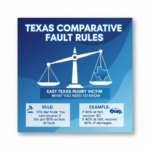
Texas follows a “modified comparative negligence” rule under Texas Civil Practice and Remedies Code § 33.001, which can dramatically reduce or eliminate your recovery based on your percentage of fault.
How Texas Comparative Negligence Works
The 51% Bar Rule:
• If you’re found 50% or less at fault, you can recover damages reduced by your percentage of fault
• If you’re found 51% or more at fault, you recover NOTHING
Examples:
Scenario 1: 20% Plaintiff Fault Total damages: $1,000,000 Plaintiff fault: 20% Recovery: $800,000 (80% of damages)
Scenario 2: 50% Plaintiff Fault Total damages: $1,000,000 Plaintiff fault: 50% Recovery: $500,000 (50% of damages)
Scenario 3: 51% Plaintiff Fault Total damages: $1,000,000 Plaintiff fault: 51% Recovery: $0 (barred from recovery)
Common Defense Arguments to Shift Fault
Insurance companies aggressively attempt to shift blame to victims:
“The plaintiff wasn’t wearing a seatbelt” Texas law generally prohibits using seatbelt non-use as evidence of comparative negligence, but exceptions exist.
“The plaintiff was speeding or following too closely” Even minor traffic violations by the victim can reduce recovery.
“The plaintiff pulled out in front of the truck” Difficult to defend without solid evidence of truck driver’s violations.
“The plaintiff was distracted by a phone” Cell phone records may be subpoenaed to investigate this claim.
“The plaintiff could have avoided the accident with evasive action” Requires accident reconstruction to counter.
How McKay Law Protects Against Comparative Negligence Claims
- Immediate Investigation We document scene conditions, traffic controls, and physical evidence before it disappears.
- Witness Interviews Independent witnesses provide unbiased accounts countering blame-shifting.
- Electronic Evidence Truck black box data, traffic camera footage, and cell phone records establish objective facts.
- Accident Reconstruction Expert analysis demonstrates the physics of the collision and shows why the victim couldn’t have avoided it.
- Focus on Defendant’s Violations Highlighting multiple defendant violations shifts focus away from minor victim actions.
Real case example:
Linda H., Greenville, Texas:
“The trucking company claimed I caused the accident by ‘improperly merging.’ McKay Law used the truck’s black box to prove the driver was texting and never saw my vehicle, and traffic camera footage showed I had properly merged with plenty of space. Instead of being blamed, we proved 100% fault on the truck driver and received $2.1 million.”
Settlement Negotiation Impact
Comparative negligence significantly affects settlement negotiations:
• Strong plaintiff position (0-10% fault): Minimal impact on settlement value
• Moderate concerns (11-30% fault): 20-40% reduction in settlement offers
• Significant exposure (31-49% fault): 50-70% reduction in settlement offers
• Near-bar territory (50% fault): Settlement value drops precipitously due to trial risk
• Over 51% fault: Case may have no settlement value
Insurance companies use doubts about fault to push for lower settlements. They may say, “Take this offer now or risk a jury finding you mostly at fault and getting nothing.”
McKay Law counters by thoroughly preparing cases to demonstrate minimal or no victim fault, eliminating this leverage tactic.
Factor #9: Venue and Jurisdiction: Where Your Case is Filed
Impact on Settlement: MODERATE TO HIGH (Can increase settlements by 30-100%)
The venue where you file your truck accident case can significantly influence your settlement. Jury attitudes, legal interpretations, and local court practices all contribute to the outcome.
Texas Venue Rules for Truck Accidents
Under Texas Civil Practice and Remedies Code § 15.002, truck accident cases may generally be filed in:
• County where the accident occurred
• County where the defendant resides
• County where the defendant has a principal office (for corporations)
• County where the plaintiff resides (in some circumstances)
This flexibility allows strategic venue selection to maximize recovery potential.
Factors Affecting Venue Value
- Jury Pool Demographics and Attitudes
Rural vs. Urban Counties:
• Rural East Texas counties often have more conservative juries skeptical of large damage awards
• Urban counties (Dallas, Houston) tend to return higher verdicts in catastrophic injury cases
• Exception: Rural juries may be more sympathetic to local plaintiffs suing out-of-state trucking companies
Socioeconomic Factors:
• Higher-income areas tend to award higher damages, particularly for lost earning capacity
• Communities with manufacturing or industrial employment understand workplace injuries better
• Areas with significant truck traffic experience may be more sympathetic to safety concerns - Local Court Practices and Procedures
Discovery practices:
• Some courts limit depositions and discovery, hampering thorough investigation
• Other courts allow extensive discovery that uncovers more evidence
Trial scheduling:
• Fast-track courts pressure earlier settlements (sometimes at lower values)
• Slower dockets give more preparation time but may financially burden plaintiffs
Judicial attitudes:
• Some judges favor defendants with restrictive evidentiary rulings
• Other judges ensure plaintiffs receive fair opportunity to present their case - Historical Verdict Trends
Counties develop reputations for plaintiff-friendly or defense-friendly verdicts:
Plaintiff-favorable Texas counties (historically higher verdicts):
• Dallas County
• Harris County (Houston)
• Bexar County (San Antonio)
• Travis County (Austin)
• El Paso County
More conservative counties (lower average verdicts):
• Many rural East Texas counties
• Some suburban counties
Important note: Every case is unique, and McKay Law’s local East Texas presence and reputation can overcome venue challenges.
McKay Law’s Strategic Venue Selection
Our attorneys analyze multiple factors when selecting venue:
✓ Accident location and applicable venue options ✓ Historical verdict data in potential venues ✓ Judge assignment and judicial temperament ✓ Local jury attitudes through voir dire research ✓ Defense counsel preferences and past performance by venue ✓ Travel logistics for witnesses and experts ✓ Client convenience and stress reduction
Client testimonial – Steven R., Hopkins County:
“McKay Law explained that while we could file in Hopkins County where the accident occurred, filing in Dallas County would likely result in a higher settlement because of historical verdict trends there. They were right—we settled for $4.2 million, far more than we would have gotten in a smaller county.”
Federal Court vs. State Court
When defendants are from out of state, cases may be filed in or removed to federal court under diversity jurisdiction. This creates additional strategic considerations:
Federal Court Advantages:
• Faster trial settings in some districts
• More sophisticated judges experienced in complex litigation
• Stricter procedural rules that can benefit prepared plaintiffs
Federal Court Disadvantages:
• Jury pools drawn from multiple counties (may dilute favorable local attitudes)
• More defense-favorable in some circuits
• Different damage award patterns
McKay Law carefully evaluates federal vs. state court options to maximize client outcomes.
Factor #10: Defendant’s Conduct and Punitive Damages Potential
Impact on Settlement: VERY HIGH (Can add millions to settlement valuPunitive damages, which are meant to punish defendants and prevent similar actions in the future, can greatly increase settlement amounts in truck accident cases that involve gross negligence, intentional wrongdoing, or fraud.ud.
Texas Punitive Damages Law
Under Texas Civil Practice and Remedies Code § 41.003, punitive damages (called “exemplary damages” in Texas) may be awarded when harm results from:
• Fraud
• Malice
• Gross negligence
Gross negligence is defined as an act or omission:
• Involving an extreme degree of risk, considering the probability and magnitude of potential harm
• Where the actor had actual, subjective awareness of the risk involved
• Proceeded with conscious indifference to the rights, safety, or welfare of others
Common Scenarios Supporting Punitive Damages
- Hours of Service Violations and Driver Fatigue
When trucking companies systematically pressure drivers to violate Hours of Service regulations, creating a pattern of dangerous conduct:
Example: Company policy requiring drivers to falsify logbooks, dispatcher messages demanding “drive through” fatigue, or financial incentives tied to illegal hours.
Why punitive damages apply: Conscious indifference to public safety for profit. - Knowingly Employing Dangerous Drivers
Hiring or retaining drivers with:
• Multiple DUIs or serious traffic violations
• Previous crashes with fatalities
• Falsified employment applications
• Revoked or suspended CDLs
Why punitive damages apply: Actual knowledge of danger yet continuing employment anyway. - Ignoring Known Mechanical Defects
Allowing trucks with known brake failures, bald tires, or other critical safety defects to remain in service:
Example: Maintenance records showing repeated notations of brake problems, but repairs never completed.
Why punitive damages apply: Conscious decision to prioritize operational uptime over safety. - Systemic Safety Violations
Pattern of FMCSA violations, failed safety audits, or conditional/unsatisfactory safety ratings:
Example: Carrier with dozens of violations over multiple years but no corrective action taken.
Why punitive damages apply: Demonstrated indifference to regulatory compliance and public safety. - Fraudulent Concealment of Evidence
Destroying driver logs, erasing black box data, or providing false information during investigation:
Why punitive damages apply: Fraud in attempting to conceal liability.
Texas Punitive Damages Caps and Limitations
Texas caps punitive damages at the greater of:
• $200,000, OR
• Two times economic damages PLUS non-economic damages up to $750,000
Example calculation:
• Economic damages: $2,000,000
• Non-economic damages: $1,500,000 (capped at $750,000 for punitive calculation)
• Punitive damages cap: (2 × $2,000,000) + $750,000 = $4,750,000
Exception: The cap does NOT apply to cases involving certain felonies or specific statutory violations, potentially allowing unlimited punitive damages.
Settlement Leverage from Punitive Damages Claims
Even if punitive damages are never awarded at trial, their presence in a lawsuit creates powerful settlement leverage: - Discovery Opens Corporate Records Punitive damages claims allow extensive discovery into:
• Corporate policies and procedures
• Past violations and accidents
• Financial condition (to set appropriate punishment level)
• Communications showing knowledge and intent - Reputational Risk Companies fear public exposure of systematic safety violations and corporate wrongdoing.
- Uninsurable Liability Most insurance policies don’t cover punitive damages, meaning defendants face personal/corporate asset exposure.
- Litigation Costs Defending against punitive damages claims requires extensive expert testimony and document production, dramatically increasing defense costs.
- Unpredictable Jury Sympathy Defense attorneys know angry juries can award massive punitive damages, creating incentive to settle.
McKay Law’s Approach to Punitive Damages
We thoroughly investigate whether punitive damages are supported:
✓ Corporate document review identifying policies showing conscious indifference ✓ Deposition strategies establishing defendant’s subjective knowledge of risks ✓ Prior incident research demonstrating patterns of dangerous conduct ✓ Expert testimony showing industry standards and defendant’s departures ✓ Financial condition discovery establishing appropriate punishment levels
Real case example – Patricia M., Sulphur Springs:
“The trucking company knew their driver had two previous DUIs and a suspended license but hired him anyway using falsified documents. McKay Law’s investigation uncovered this fraud, and we added punitive damages claims. The company settled for $8.3 million—nearly double what they initially offered—to avoid a jury hearing about their willful disregard for public safety.”
When NOT to Pursue Punitive Damages
McKay Law strategically evaluates whether punitive damages claims strengthen or weaken your case:
Don’t pursue if:
• Evidence of gross negligence is weak (strengthens defendant’s position)
• Policy limits are relatively low (not worth additional litigation costs)
• Simple negligence is sufficient to maximize available insurance
• Punitive damages claim might alienate conservative juries
Do pursue if:
• Strong evidence of willful misconduct exists
• Multiple insurance layers are available
• Defendant has substantial personal/corporate assets
• Corporate policy changes would benefit public safety
How McKay Law PLLC Maximizes Your Truck Accident Settlement
At McKay Law, we use a thorough approach that covers every factor that can affect your settlement:
Our Proven 10-Step Process
Step 1: Immediate Action and Evidence Preservation
• 24/7 availability for accident response
• Scene investigation within hours, not days
• Spoliation letters to preserve electronic evidence
• Witness identification and interviews
Step 2: Comprehensive Medical Case Management
• Connections with top specialists for treatment
• Medical record compilation and organization
• Coordination with life care planners
• Documentation of every injury impact
Step 3: Thorough Liability Investigation
• Black box data retrieval and analysis
• FMCSA compliance record review
• Corporate structure and policy investigation
• Identification of all liable parties
Step 4: Expert Witness Collaboration
• Accident reconstruction specialists
• Trucking industry experts
• Medical specialists in each injury type
• Economic and vocational experts
• Life care planners
Step 5: Detailed Damages Quantification
• Comprehensive economic loss calculations
• Life care plans projecting lifetime costs
• Vocational assessments of earning capacity loss
• Present value determinations by economists
Step 6: Strategic Venue Selection
• Analysis of all available jurisdiction options
• Historical verdict research
• Judicial temperament evaluation
• Client convenience considerations
Step 7: Aggressive Discovery and Depositions
• Comprehensive document requests
• Depositions of all key witnesses
• Corporate representative examinations
• Expert witness disclosure and review
Step 8: Settlement Negotiation Leverage
• Trial-ready case preparation
• Multiple defendant identification
• Punitive damages claims when appropriate
• Refusal to accept inadequate offers
Step 9: Trial Preparation
• Jury research and focus groups
• Compelling visual exhibits and technology
• Witness preparation and practice
• Strategic trial presentation planning
Step 10: Maximum Recovery
• Settlements negotiated from strength
• Trial verdicts when necessary
• Collection enforcement
• Structured settlements when beneficial
What Sets McKay Law Apart
✓ No Recovery, No Fee – You pay nothing unless we win ✓ We Advance All Costs – No out-of-pocket expenses for investigation or experts ✓ Local East Texas Roots – Offices in Sulphur Springs, Dallas, and Tyler ✓ Specialized Truck Accident Focus – Not a side practice, but a core competency ✓ Trial-Proven Attorneys – Respected reputation that drives higher settlements ✓ Personalized Attention – Your case receives senior attorney involvement, not delegation to staff ✓ Compassionate Advocacy – We treat clients like family during difficult times
Client Success Stories
Thomas and Rebecca K., Commerce: “After our daughter was killed by a drunk truck driver, we were devastated and lost. McKay Law handled everything—the legal case, dealing with insurance companies, even helping us find grief counseling. They secured a $6.8 million settlement that provided for our grandchildren’s education and honored our daughter’s memory. We can never repay their compassion and dedication.”
David M., Mount Vernon: “I’m a mechanic, and I knew the truck that hit me had brake violations, but I didn’t know how to prove it. McKay Law’s investigators found maintenance records showing the company ignored multiple brake failure reports. That evidence turned a $300,000 offer into a $2.4 million settlement that’s allowing me to support my family despite my injuries.”
Karen S., Paris: “I was nervous about going up against a huge national trucking company with unlimited resources. McKay Law matched them expert for expert, document for document, and never backed down. They spent over $150,000 preparing my case, and it resulted in a $5.2 million settlement. I couldn’t have asked for better advocates.”
Frequently Asked Questions About Texas Truck Accident Settlements
How long do I have to file a truck accident lawsuit in Texas?
Texas has a two-year statute of limitations for personal injury claims and wrongful death claims (from the date of injury or death). However, you should contact an attorney immediately because:
• Evidence disappears quickly
• Witnesses’ memories fade
• Electronic data may be overwritten
• Insurance companies use delays against you
Should I accept the insurance company’s first settlement offer?
Almost never. Initial offers are typically a fraction of true case value. Insurance adjusters know most accident victims:
• Don’t understand their injury’s full extent yet
• Haven’t reached maximum medical improvement
• Are financially desperate and will accept low offers
• Don’t know the value of their claim
At McKay Law, we make sure you know the full value of your case before you think about settling.
What if the truck driver was an independent contractor?
The trucking company may still be liable under various legal theories:
• Negligent hiring or contracting
• Actual control over the driver’s operations
• Non-delegable duties for safe transportation
• Violations of FMCSA regulations
We thoroughly investigate the driver-company relationship to hold all responsible parties accountable.
How much is my truck accident case worth?
Case value depends on the ten factors discussed in this article, particularly:
• Injury severity and permanence
• Available insurance coverage
• Strength of liability evidence
• Economic damages documentation
Contact McKay Law for a free case evaluation and honest assessment of your claim’s value.
What if I was partially at fault for the accident?
Under Texas comparative negligence rules, you can still recover if you’re 50% or less at fault, though your damages are reduced by your fault percentage. McKay Law works to minimize any attributed fault through thorough investigation and evidence.
Do I really need an attorney, or can I handle the claim myself?
While legally you can represent yourself, truck accident cases involve:
• Complex federal regulations most people don’t understand
• Sophisticated insurance defense tactics
• Multiple defendants with teams of attorneys
• Technical evidence requiring expert analysis
• Life care planning and economic projections
Statistics show represented claimants recover 3-5 times more than unrepresented individuals, even after attorney fees.
How long will my truck accident case take?
Case duration varies based on:
• Injury severity: Catastrophic injuries require reaching MMI before settling (6-24+ months)
• Liability disputes: Clear liability settles faster than contested fault
• Settlement negotiations: Reasonable insurers settle faster than aggressive defendants
• Trial necessity: Cases going to trial take 2-4 years
McKay Law works quickly on your case but will not rush into a settlement that doesn’t reflect your claim’s true value.
What if the trucking company is denying liability?
Denied claims require aggressive legal action:
• Formal litigation with comprehensive discovery
• Expert witness testimony establishing liability
• Depositions of company representatives
• Document production revealing violations
McKay Law has extensive experience overturning initial liability denials through thorough investigation and compelling evidence.
Take Action: Understanding the factors that affect your truck accident settlement is only the first step. The next is to hire an experienced attorney who can help you maximize your claim.
Why Act Now?
⏰ Evidence is Disappearing – Every day that passes, critical evidence is lost ⏰ Your Statute of Limitations is Running – Don’t risk losing your right to compensation ⏰ Your Family Needs Financial Security – Medical bills and lost wages create immediate pressure ⏰ Insurance Companies Are Building Their Defense – They’re working against you from day one
Contact McKay Law PLLC Today
Free Case Evaluation – No Obligation
Our experienced Texas truck accident attorneys are ready to: ✓ Review your case at no cost ✓ Explain your legal options clearly ✓ Answer all your questions ✓ Provide honest case value assessment ✓ Start working immediately if you choose us
Three Convenient East Texas Locations:
📍 Sulphur Springs Office [Address] [Phone Number]
📍 Dallas Office [Address] [Phone Number]
📍 Tyler Office [Address] [Phone Number]
24/7 Emergency Response Available
🌐 Online: [Website Contact Form] 📧 Email: [Email Address] 📱 Text: [Phone Number]
Our Promise to You
When you choose McKay Law PLLC, you get:
✅ No Fees Unless We Win – You pay nothing upfront, and nothing unless we recover compensation ✅ Personal Attorney Attention – Senior attorneys handle your case, not paralegals or case managers ✅ Aggressive Representation – We fight for maximum compensation, not quick settlements ✅ Transparent Communication – We keep you informed at every stage ✅ Compassionate Support – We understand the trauma you’ve experienced and treat you with dignity
Conclusion: Knowledge + Action = Justice
The ten factors outlined in this comprehensive guide demonstrate why truck accident cases are among the most complex in personal injury law. Each factor—from injury severity to punitive damages potential—plays a critical role in determining your settlement value.
But knowing these factors is only part of the process. Taking action and hiring an experienced lawyer turns that knowledge into the best possible compensation.
At McKay Law PLLC, we’ve dedicated our practice to helping East Texas families recover from devastating truck accidents. Our offices in Sulphur Springs, Dallas, and Tyler position us to serve families throughout the region with the personalized attention and aggressive advocacy you deserve.
Don’t let insurance companies take advantage of you. Contact McKay Law today for a free case evaluation, and let us help you get the justice and compensation you deserve.
McKay Law PLLC represents truck accident victims throughout East Texas including Hopkins County, Hunt County, Dallas County, Smith County, Rains County, Wood County, Gregg County, Kaufman County, Rockwall County, and surrounding areas. Our experienced attorneys handle 18-wheeler accidents, semi-truck crashes, commercial vehicle accidents, and all catastrophic injury cases.
Your recovery is our mission. Your justice is our commitment.
Legal Disclaimer: This article is provided for informational purposes only and does not constitute legal advice. Every truck accident case is unique, and outcomes depend on specific facts and circumstances. Past results do not guarantee future outcomes. For specific legal advice about your case, contact McKay Law PLLC for a free consultation.
Last Updated: January 2026