


ESPAÑOL | FREE CASE EVALUATION | 1-866-335-5885 | AVAILABLE 24/7
“Texas Tough” McKay Law
Whatley Slip and Fall Accident Attorney
A slip and fall can happen in a split second and change everything. Broken bones, head injuries, back and neck injuries — these are the real consequences of a hazard no one cleaned up. At McKay Law, we stand with slip and fall victims throughout Whatley, holding businesses accountable whose failure to maintain safe conditions caused life-altering damage. When the fall happened at a grocery store or supermarket, a restaurant or bar, an commercial property, or a common area, our committed trial lawyers are ready to pursue every responsible party.
Our firm takes on slip, trip, and fall cases throughout Whatley and the surrounding East Texas communities, standing up for people injured by liquid hazards left unaddressed, produce debris in grocery stores, damaged carpeting, uneven pavement, missing or broken handrails, poorly lit walking surfaces, ice, water, or weather-related hazards, loose rugs or floor mats, and other dangerous conditions. Armed with a strong working knowledge of Texas premises liability law and the invitee-licensee-trespasser framework, we build cases designed to hold every responsible party accountable. The heart of every slip and fall case is notice — did the property owner know about the hazard before you fell? Insurance companies routinely blame the victim — arguing you weren’t paying attention, that the hazard was “open and obvious,” or that store records tell a different story. We know how to counter these tactics and build the evidence your case needs. With a history of real results against major retailers and their insurers, we work tirelessly to help you move forward. Let our family help yours.
Do You Have A Claim?
Whatley Slip and Fall Accident Law Firm | McKay Law
A trip and fall accident can turn your world upside down in an instant. One second you’re shopping at a property in Whatley, TX, and the next you’re dealing with broken bones, mounting hospital bills, aggressive insurance adjusters, time away from work, and questions you never thought you’d face. McKay Law fights for those hurt by negligent property owners and their families across Texas, guiding them through every phase of the legal process with clarity and purpose. Whether your fall resulted from a wet or slippery floor, tracked-in rainwater, damaged carpeting, unsecured floor mats, cracked or uneven sidewalks, poorly maintained stairs, poorly lit walkways, cluttered aisles, unsafe lot conditions, or missing “wet floor” signs, our attorneys thoroughly examine the evidence—store records, surveillance footage, maintenance and cleaning logs, past safety issues, photographs of the hazard, and witness accounts—to show exactly how the property owner or business is responsible for your injuries.
Quality legal representation takes more than trial skills—more so when establishing how long the dangerous condition existed. At McKay Law, we recognize the true impact a dangerous fall incident imposes on your body, your finances, and your family’s sense of security—especially since falls often cause serious orthopedic harm. That’s why we combine strong legal advocacy with real empathy, supporting you from your first consultation through the final outcome. Property owners, businesses, and their insurers are experts at minimizing payouts, claiming the hazard was “open and obvious”, destroying surveillance footage, denying they knew about the spill, and pointing fingers—we are equally skilled at pushing back. Our firm holds negligent property owners, retail stores, restaurants, grocery stores, management companies, and insurance carriers fully accountable under Texas law, giving injured people in Whatley, TX the outcomes and peace of mind they deserve.
Every client we represent deserves the fullest recovery the law allows—particularly when slip and fall injuries can cause lasting physical harm. That means demanding compensation for emergency care, long-term treatment, surgeries and rehabilitation, physical therapy, mobility aids, lost income, diminished earning capacity, pain and suffering, mental anguish, and the enduring impact of your injuries. While we take care of the investigation, negotiation, and litigation—including securing incident reports before the property owner can let it be overwritten—you stay focused on healing. If you’ve been harmed by a property owner’s negligence in Whatley, TX, reach out to McKay Law—we’ll protect your rights and help you move forward with confidence.
Understanding Slip and Fall Accident Claims in Whatley, TX
Most of us dismiss a slip-and-fall as something to laugh off — until the injury turns out to be life-altering. A broken hip, a torn rotator cuff, a herniated disc, a traumatic brain injury from striking the head on the way down — none of these are trivial problems, and none of them go away on their own. For seniors, a single fall can mark a permanent decline in mobility and independence. And in case after case, the condition that caused the fall was something the property owner knew about — or should have known about — and didn’t fix. If a loved one was hurt in a slip-and-fall in Whatley, TX, Texas law may provide you with a path to compensation, though the path is narrower and more technical than most people expect.
The Reason Slip-and-Falls Get Underestimated
At a glance, a slip-and-fall claim sounds simple: you fell on someone’s property, they should pay. In Texas, the truth is considerably more complicated. These are some of the most aggressively defended personal injury claims in the state, and insurance companies rely on injured people not knowing the rules.
You Have to Prove the Owner Knew — or Should Have Known. It’s not enough to establish that a hazard existed. Texas law requires the plaintiff to show the property owner had actual or constructive knowledge of the dangerous condition and neglected to address it.
“Open and Obvious” Is a Favorite Defense. If the hazard was plainly visible — a large yellow spill, an obvious hole in the sidewalk, a cord stretched across a walkway — the defendant may claim they had no duty to warn about something any reasonable person would see and avoid.
Comparative Fault Gets Weaponized. Defense lawyers reliably argue that the injured person wasn’t watching where they were walking, was distracted by a phone, or was wearing inadequate footwear — whatever to shift blame from the property to the person who fell.
Evidence Disappears in Days. The spill gets mopped. The broken floor tile gets replaced. Surveillance footage gets overwritten on short cycles. The incident report — if the store even wrote one — gets buried in a risk management file.
Common Causes of Slip-and-Fall Injuries
Most slip-and-fall claims in Whatley, TX trace back to a handful of recurring hazards:
- Wet or freshly mopped floors without warning signs
- Spilled liquids in grocery stores, big-box retailers, and restaurants
- Leaking refrigeration units and coolers
- Uneven tile, flooring transitions, or worn carpet
- Cracked sidewalks, parking lots, and entryways
- Poor lighting in stairwells, garages, and walkways
- Icy or wet entry mats not changed or maintained
- Loose handrails or missing handrails on stairs
- Clutter and merchandise left in aisles
- Cords and cables stretched across walking paths
- Broken or uneven stairs
- Potholes and ruts in parking lots
- Recently waxed floors without warning
- Rainwater tracked inside without adequate mats or caution signs
What unites them is a property owner or employee who either created the hazard or failed to address one they knew about.
How Texas Law Governs Slip-and-Fall Claims
Slip-and-fall claims in Whatley, TX are controlled by Texas premises liability law — the Texas Civil Practice and Remedies Code and decades of common-law doctrine. Several principles dominate:
The Four Elements. To succeed, the plaintiff must show (1) the owner or occupier had actual or constructive knowledge of a condition on the premises, (2) the condition posed an unreasonable risk of harm, (3) the owner or occupier did not exercise reasonable care to reduce or eliminate the risk, and (4) that failure proximately caused the injury.
Actual vs. Constructive Knowledge. “Actual knowledge” means someone at the business directly knew about the hazard. “Constructive knowledge” means the hazard existed long enough that a reasonable owner should have discovered it. Texas courts call this the “time-on-floor” question, and it’s where most slip-and-fall cases are won or lost. A puddle that existed for five minutes is hard to pin on the business. The same puddle, with shopping cart tracks through it and footprints around it, suggesting it had been there for an hour, tells a very different story.
Your Visitor Status Matters. Texas law divides visitors into three categories — invitee, licensee, and trespasser — and the duty owed depends on which category you fall into. A customer at a business is an invitee and is owed the highest duty. A social guest at a home is a licensee and is owed a lesser duty. A trespasser is owed the least.
Modified Comparative Fault. Texas follows a “51% bar rule.” If the injured person is found more than 50% at fault, recovery is blocked. Below that, damages are reduced by the injured person’s percentage of fault. This is where insurers push hardest.
Damage Caps. Most compensatory damages are uncapped. Punitive damages are subject to statutory limits. Claims against governmental entities — falls at public schools, courthouses, or city sidewalks — are governed by the Texas Tort Claims Act, which imposes damage caps and short notice deadlines.
Common Slip-and-Fall Locations
After handling slip-and-fall cases for clients across East Texas, certain settings produce injury claims repeatedly:
- Grocery stores and supermarkets (spills, leaking produce mist, wet entryways)
- Big-box retailers like Walmart, Target, and home improvement stores
- Restaurants and fast-food establishments (kitchen spills, wet bathroom floors)
- Hotels and motels (pool decks, lobby entryways, bathroom floors)
- Apartment complexes (broken stairs, poor lighting, uncleared walkways)
- Office buildings and commercial lobbies
- Gas stations and convenience stores
- Gyms and fitness centers
- Parking lots and parking garages
- Hospitals and medical offices
- Nursing homes and assisted living facilities
- Public buildings and government offices (triggering Tort Claims Act issues)
- Private homes (often resolved through homeowner’s insurance)
The Injuries That Follow
Slip-and-fall injuries are often more serious than people assume — especially for older adults. The injuries we see most often include broken hips, wrists, ankles, and elbows; traumatic brain injuries from striking the head; herniated and bulging discs; torn rotator cuffs and other shoulder injuries; knee injuries including meniscus tears and ACL damage; facial fractures and dental injuries; spinal cord injuries in severe cases; and chronic pain syndromes that develop long after the initial trauma.
For adults over 65, a hip fracture from a fall carries a strikingly elevated mortality risk in the year that follows — a reality that makes properly valuing these cases non-negotiable.
Building the Record
Slip-and-fall cases are built on evidence that frequently starts disappearing the moment it’s created. The most valuable evidence includes surveillance footage (many businesses overwrite within 7 to 30 days, sometimes less), incident reports filed by staff or management, photographs of the hazard and the scene at the time of the fall, the footwear worn at the time, witness names and statements, maintenance and cleaning logs (which often show how often and when floors were inspected), prior complaint records, prior incident reports involving similar hazards, medical records documenting the injuries and causation, and — where relevant — expert analysis from safety engineers, human factors experts, or flooring specialists.
The difficulty: most of this evidence is controlled by the property owner, and routine business practices destroy or discard it quickly. A preservation letter sent by an attorney in the first days after a fall can be the difference between having proof and losing it.
What the First Hours Matter
What happens in the first day after a fall substantially affects any later claim. When possible:
- Report the fall to the manager or property owner immediately and insist on an incident report — ask for a copy
- Photograph the hazard from multiple angles before anyone cleans it up
- Photograph your footwear
- Document the exact location and time
- Get names and phone numbers from any witnesses
- Seek medical attention, even if you think you’re “just sore” — many serious injuries don’t present symptoms for hours or days
- Preserve any clothing or items damaged in the fall
- Avoid giving a recorded statement to the property’s insurer before consulting an attorney
- Do not post about the fall on social media
- Keep every medical bill, pharmacy receipt, and appointment record
Filing Deadlines
Texas generally imposes a two-year statute of limitations on slip-and-fall claims, measured from the date of the fall. Let it pass, and the right to recover is almost always gone — permanently. Watch out: falls on property owned by a governmental entity — a city sidewalk, a county building, a public school, a public hospital — are governed by the Texas Tort Claims Act, which requires written notice of the claim far sooner, often within six months or less. Many municipalities have their own charter-based notice rules that are shorter still. Missing a notice deadline under the Tort Claims Act can end an otherwise strong case at the gate.
Why Experienced Counsel Matters
These cases are deceptively complex — until you try to navigate one. Retailers, apartment management companies, nursing home chains, and their insurers have defense playbooks refined over thousands of claims. They know the “open and obvious” defense, they know how to question whether the hazard existed long enough to establish constructive knowledge, and they know how to turn a customer’s fall into an argument about the customer’s own inattention. They frequently offer quick settlements before the full medical picture — including future surgeries, chronic pain management, and lost earning capacity — has come into focus.
An experienced Whatley slip-and-fall attorney shifts that dynamic. The right lawyer will send preservation letters immediately to protect surveillance footage and incident reports, investigate the property’s history of similar falls, obtain cleaning and inspection logs, identify every potentially liable party (property owner, operator, tenant business, cleaning contractor, maintenance company), bring in safety engineers or human factors experts when warranted, document the full long-term cost of the injuries, and refuse to accept a settlement that doesn’t reflect the true value of the case.
If you or someone you care about was hurt in a slip-and-fall in Whatley, TX, don’t wait for the insurance company’s first offer. Reach out to an experienced slip-and-fall attorney right away for a review of your case — before evidence disappears and critical deadlines slip by.
Slip and Fall Attorney in Whatley: Devoted Legal Advocacy from Lindsey McKay
A single moment can change everything. When a puddle, a wet floor, or an unflagged danger causes someone to fall hard, the injured party seldom emerges untouched. Healthcare bills begin arriving before the swelling goes down. What should have been a short outing becomes weeks of missed work. Wages stop flowing while recovery stretches on for weeks or months. And behind all of it is the unspoken, wearying load of psychological trauma that does not show up on any X-ray.
For residents throughout Whatley who are navigating this type of abrupt disruption, the path forward often feels impossible to navigate alone. They need someone in their corner who understands what they are facing, regards them as an individual rather than a docket entry, and will work tirelessly for the recovery they are owed. Lindsey McKay has structured her law practice around precisely this type of advocacy, assisting slip and fall injury victims across Whatley with a blend of genuine compassion and serious legal firepower.
Client-First Legal Representation
Plenty of law firms advertise themselves as client-focused. What genuinely separates Lindsey McKay’s approach is how consistently that promise holds up in practice. She approaches each case knowing that behind the incident reports, health records, and insurance communications, there is a real human being trying to put their life back together. The person in her office could be a parent worried about providing for their kids, a customer hurt while simply running errands at a store, or a retiree whose tranquil routine has been broken by a fall they never saw coming.
Instead of speeding through intake and imposing a cookie-cutter strategy on every case, McKay takes time to listen. She wants to comprehend the events, what her client has lost, and what recovery needs to look like for that particular family. Only then does she develop a case approach shaped by those unique details.
This client-first approach equally shapes how she keeps in touch. People she represents should never have to question the status of their matter or pursue their own attorney just to get updates. McKay stays in touch with clients throughout every step of the process, breaking down updates in straightforward terms and making sure questions get answered. That kind of regular, candid conversation builds the trust that carries a case through months, sometimes years, of litigation.
The Full Impact of a Slip and Fall
Slip and fall accidents take many forms. Some feature wet surfaces at supermarkets where liquid spills have no warning signs. Others involve wet-mopped floors in restaurants, leaking coolers, or rain tracked in at store doors, where a breakdown in posting signs or cleaning promptly results in a significant fall. Icy sidewalks, wet stair treads, waxed floors without proper signage, and liquid spills near beverage stations all carry their own particular dangers. Their common feature is that the party in control of the premises neglected their duty to keep floors reasonably safe. Under Texas legal code, property owners and businesses are required to use reasonable care in keeping their premises safe for those who visit, and when that duty is breached, the results are usually catastrophic.
Traumatic brain injuries, spinal cord damage, broken bones, hip fractures, torn ligaments, and permanent disfigurement are among the injuries slip and fall victims commonly face. Falls can prove especially life-changing for older adults, often leading to long-term mobility problems or worse. Health experts have identified falls as a leading cause of injury-related death in older adults. But the first ER invoice is seldom the final cost. Healing often extends for months or years, including surgeries, physical therapy, assistive devices, home changes, and continuing care. Some patients are unable to return to their former occupations. Others can’t maintain independent living anymore.
McKay takes the time to capture the full measure of what her clients have suffered. That means looking beyond the immediate bills to account for future medical needs, rehabilitation costs, reduced earning potential, bodily pain and mental suffering, and the general loss of life satisfaction. Texas law allows recovery for all of these categories of damages, but only when they are adequately chronicled and presented. Her thorough approach is designed to guarantee no detail is forgotten.
The emotional aftermath deserves the same careful attention. Fear of falling again, stress in stores and other public settings, depression, post-traumatic stress, and strained relationships are all common among slip and fall survivors. These are not minor or lesser injuries. They are real harms that deserve real compensation, and McKay strives to see them fairly valued in every matter she manages.
Guiding Clients Through a Complicated Legal System
Slip and fall matters in Texas are rarely uncomplicated. Building a slip and fall case normally requires proving the property owner had notice or should have had notice of the unsafe condition, had a fair chance to correct the problem or alert visitors, and failed to do so. Proving how long a spill was on the floor or whether staff had inspected the area recently is commonly where success or failure is determined.
On the other side, businesses and their insurers usually respond with force. They often have investigators and defense lawyers on the scene within hours of a fall, laboring to construct a story that shifts blame to the victim. They may contend the condition was “open and obvious” or that the victim was careless. Under Texas’s proportionate responsibility law, any share of fault attributed to the victim lowers their recovery, and if the victim is assessed at over 50% at fault, they receive no compensation. Meanwhile, injured people are generally still receiving medical care. The push to settle fast, before the full extent of injuries is known, can be overwhelming. Lowball proposals often come wrapped as generous offers.
Pushing back against that pressure requires counsel who understands the field. McKay is well-versed in Texas premises liability law, comparative fault principles, and the safety standards that apply to businesses and property owners. She is familiar with what camera recordings, inspection documentation, and cleaning logs should contain, what store policies typically require when it comes to identifying and cleaning up hazards, and how to fight the “open and obvious” and shared fault defenses that routinely come up. She stays current on legal developments that might affect her clients’ cases.
Her approach to investigation is careful and orderly. She works with safety engineers, flooring experts, medical professionals, and vocational economists to construct cases that withstand examination. Evidence gets preserved carefully, from surveillance video and incident reports to inspection logs, cleaning records, photos of the scene, and witness statements. When settlement talks work out, that groundwork pushes values upward. When a case has to go to trial, that same preparation is what wins verdicts.
A Local Attorney with Local Knowledge
Whatley has its own blend of supermarkets, retail chains, restaurants, and shopping venues where slip and fall incidents occur. Each involves distinct risks, common pitfalls, and safety standards. McKay’s experience in the community means she understands how community businesses operate, what safety regulations apply, and how nearby courts handle these cases.
That regional awareness matters. So does her commitment to candid, ethical representation. McKay gives clients the truth about their claims, including the weaknesses. She does not guarantee outcomes she cannot ensure. What she offers instead is truthful analysis, diligent preparation, and tireless work for her clients.
Prompt Action Matters
If you or a family member has been hurt in a fall at a store or business in Whatley, the steps taken in the first days after the fall can influence the whole case. Texas imposes strict time limits on personal injury claims, and critical evidence can disappear quickly. Surveillance footage may be overwritten, sometimes within days. The spill is addressed and the area is restored. Inspection files and maintenance documentation can be misplaced or changed. Bystanders move away or lose their recollections. Workers move on and become tough to track down.
Meanwhile, the company’s team is already busy constructing their version of events. The quicker you have your own attorney looking into things, preserving proof, and alerting the liable parties, the more solid your case becomes.
Lindsey McKay offers sympathetic, skilled legal advice to help slip and fall victims understand their rights and think through their options. Approaching a case properly means more than processing paperwork and waiting for a settlement proposal. It means battling for the respect, welfare, and economic stability of the injured person. With McKay handling the legal fight, clients can focus on healing while she directs her efforts at making negligent businesses, property owners, and their insurance carriers accountable for the harm they caused.
6 Most Common Factors Behind Slip-and-Fall Accidents in Whatley
Slip-and-fall accidents are one of the most frequent types of personal injury claims in Whatley and nationwide. Despite the deceptively simple name, these falls can cause severe injuries — broken hips, wrist fractures, traumatic brain injuries, spinal damage, and even fatalities, particularly among older adults. Regardless of whether you’re a longtime local of Whatley or new to the area, knowing what causes most slip-and-fall accidents can allow you to stay alert, protect yourself, and know what to do if you’re ever injured. Here are the six most common factors in slip-and-fall accidents in Whatley.
#1 Wet or Slippery Floors
Wet floors are the single most common cause of slip-and-fall accidents in Whatley. Grocery store aisles where a drink has spilled, freshly mopped restaurant floors without warning signs, water tracked in from rainy weather, leaking refrigerator cases, and wet bathroom tiles all lead to serious falls every day. Property owners have a legal duty to clean up spills right away and warn visitors about wet surfaces — and when they don’t, they can be held liable for resulting injuries.
Protect yourself: Watch for warning cones, walk slowly on shiny or freshly cleaned surfaces, and report spills to staff when you see them.
2. Uneven Surfaces
Cracked sidewalks, uneven pavement, raised tiles, torn carpeting, loose floorboards, and potholes in parking lots cause a substantial number of falls in Whatley. Older neighborhoods and strip malls where maintenance has been neglected are notably prone to these hazards. Even half-inch difference in surface height can catch a toe and send someone sprawling — and property owners are responsible for keeping walking surfaces in proper condition.
Stay safe: Watch where you’re walking most carefully in parking lots and older commercial areas, and report damaged flooring to property management in writing.
3. Dim or Burned-Out Lights
Poor lighting turn otherwise manageable hazards into serious dangers. Stairwells with burned-out bulbs, parking garages with broken overhead lights, dimly lit restaurant entrances, and unlit apartment walkways all contribute to falls in Whatley. When people can’t see cracks, curbs, steps, or obstacles, they’re far more likely to misjudge a step or miss a change in elevation. Property owners have a duty to maintain sufficient lighting throughout their premises.
Stay safe: Use a phone flashlight in dim areas, avoid poorly lit shortcuts, and report burned-out lights to property managers.
#4 Dangerous Stairs
Staircases are involved in a notable share of serious fall injuries because the consequences of falling down stairs are often far worse than a flat-surface fall. Missing or loose handrails, uneven step heights, worn or torn carpet runners, inadequate lighting, and wet or slippery treads all contribute to stairway accidents in Whatley. Building codes mandate specific standards for stair construction and maintenance, and violations of those codes commonly support premises liability claims.
Stay safer: Always use handrails when available, take stairs deliberately when carrying items, and avoid distractions like your phone while descending.
5. Weather-Related Hazards
Whatley weather can create sudden slip-and-fall hazards. Heavy rain brings water tracked onto tile floors and slippery wet surfaces outside building entrances. Occasional ice storms and freezing rain create dangerous conditions on sidewalks, parking lots, and stairs — even in areas that seldom see winter weather. Property owners have a legal obligation to address weather-related hazards within a appropriate time, including putting out mats, clearing walkways, and posting warnings.
Protect yourself: Wear appropriate footwear during wet or icy weather, take extra care on slick surfaces, and use handrails wherever they’re available.
#6 Obstacles and Debris
Merchandise left in grocery store aisles, boxes blocking warehouse walkways, loose cords across floors, trash and debris on sidewalks, and construction materials left in pedestrian areas all cause trips and falls in Whatley. Retail stores are particularly prone to these claims when employees restock shelves during busy hours or leave pallets and ladders in aisles. Property owners are responsible for keeping walking paths clear or clearly marked when obstructions can’t be avoided.
Stay safer: Stay alert in busy stores during restocking hours, watch for cords or boxes on the floor, and report tripping hazards to staff or management.
Steps to Take After a Slip-and-Fall
Slip-and-fall cases typically come down to evidence, and evidence disappears fast. Wet floors get mopped up, warning cones get moved, and broken tiles get repaired — sometimes within hours of an accident. If you fall: report the incident to the property owner or manager as soon as possible and ask for a written incident report, take photos of the hazard and your injuries before anything changes, get contact information from any witnesses, save the clothes and shoes you were wearing, and seek medical attention even if you feel okay — head and spinal injuries aren’t always obvious right away. Texas law generally gives slip-and-fall victims two years from the date of injury to file a claim, but acting quickly makes a difference because proof fades fast.

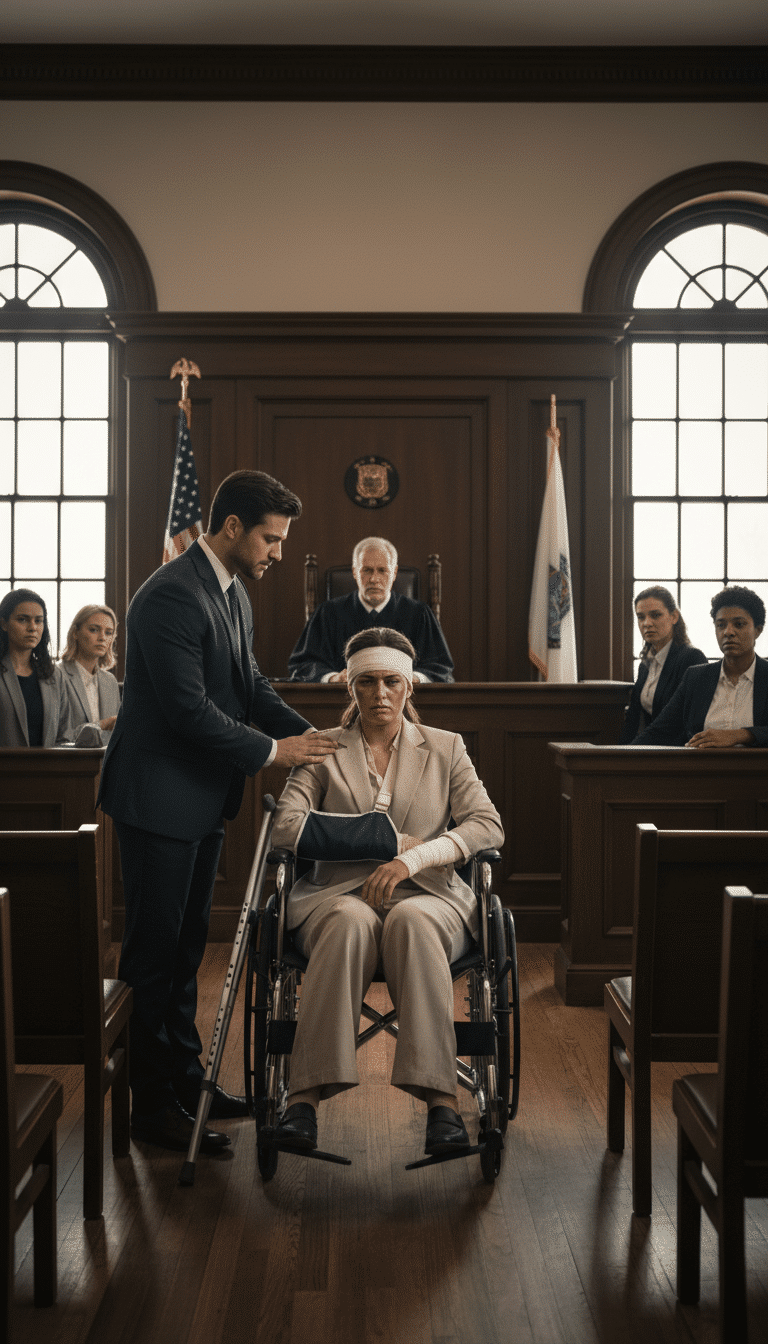
What rights do I have in Whatley after a slip and fall accident
Right to seek compensation. If someone else’s negligence caused your injury, you can pursue damages for medical bills (past and future), lost wages and lost earning capacity, property damage, pain and suffering, mental anguish, and in some cases punitive damages if the conduct was grossly negligent.
Statute of limitations. Texas generally gives you two years from the date of the injury to file a lawsuit (Texas Civil Practice & Remedies Code §16.003). Miss it and you usually lose the right to sue entirely. Claims against government entities have much shorter notice deadlines — often six months or less.
Modified comparative fault (the “51% bar rule”). Texas reduces your recovery by your percentage of fault, and if you’re found more than 50% at fault, you recover nothing.
Right to refuse to give a recorded statement to the other party’s insurance company. You’re not obligated to, and it’s often wise not to without legal advice.
Right to your own medical care and records, and to choose your own doctor (outside of workers’ comp situations, where rules can differ).
Right to negotiate or reject settlement offers. Initial insurance offers are typically low; you’re not obligated to accept.
If it’s a car accident: Texas is an at-fault state, so the at-fault driver’s insurance is primarily liable. Minimum liability coverage is 30/60/25.
If it’s a work injury: Texas is unusual in that employers can opt out of workers’ comp. If your employer carries it, your remedies are generally limited to the WC system; if they don’t, you may be able to sue them directly.
The Texas Tough Difference
See why so many others choose McKay Law, PLLC
With over 300 five-star reviews, McKay Law, your local Personal Injury Law Firm has earned the trust and gratitude of our clients. Every case we handle is unique, and every client’s story matters. Don’t just take our word for it—hear directly from our clients about their experiences and why they confidently recommend us to others.
